
Printed Cards Get Ignored. An E-paper Instore Advertising Display Doesn't.
A static card taped above a washing machine blends into the aisle after the third visit. Here's how a looping animated e-paper instore advertising display next to Toshiba machines breaks through that visual filter — and shows the selling points at a glance.
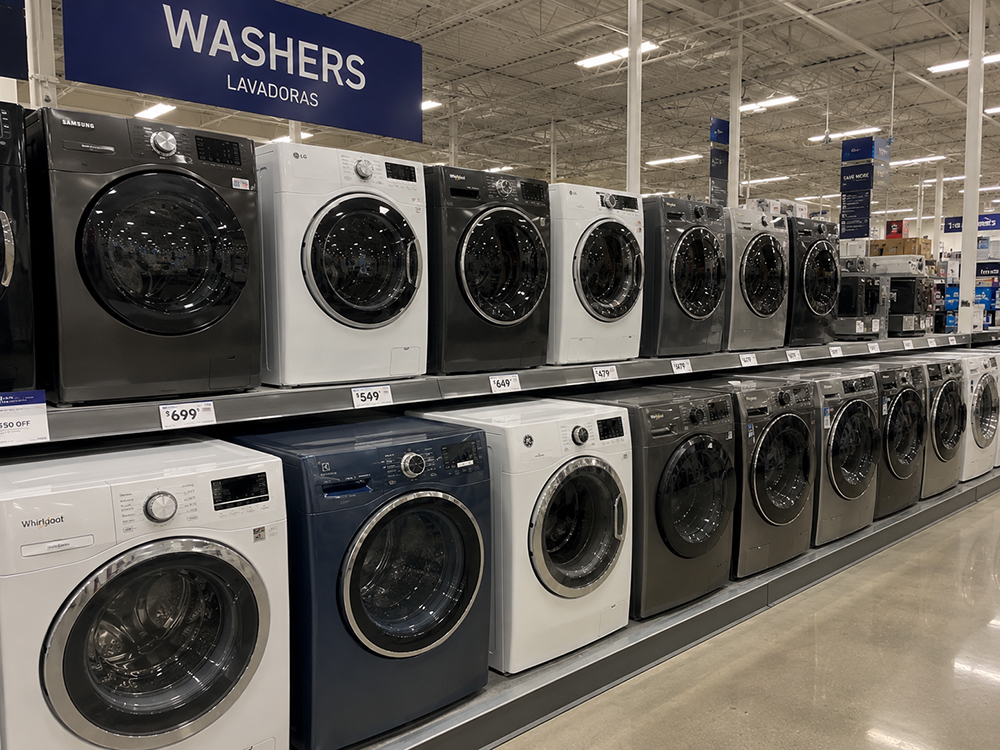
Walk any white-goods floor and you'll see the same setup: rows of washing machines, all roughly the same size and shape, each with a printed feature card taped above the drum. The cards say the same things — "steam wash," "inverter motor," "11 kg." After a shopper has walked past them a few times, the brain simply stops registering them.
That's the real problem with printed POS in an appliance aisle — and it isn't the printing cost. It's that a static card never changes. The message is the same on day one and day ninety. After enough exposures, it becomes background noise. The features that actually separate one machine from another — the ones engineers spent years building — sit in fine print that nobody ever stops to read.
Static cards blend into the aisle
A few stores tried playing brand videos on small LCD screens instead. That didn't work either. A glowing panel in a bright showroom washes out, needs a power outlet beside every machine, and asks shoppers to stand in front of a washing machine and watch a video. Nobody does that.
Static = invisible
A printed card never changes. After the third or fourth visit, the brain filters it out automatically — the same way you stop noticing a poster you walk past every day.
Fine print doesn't sell
The real selling points are buried in a paragraph of small text. Shoppers don't stop to read — they glance, see a wall of words, and move on.
Screens wash out
TV-style screens lose contrast under bright showroom lighting, need an outlet at every machine, and feel out of place next to a premium appliance.
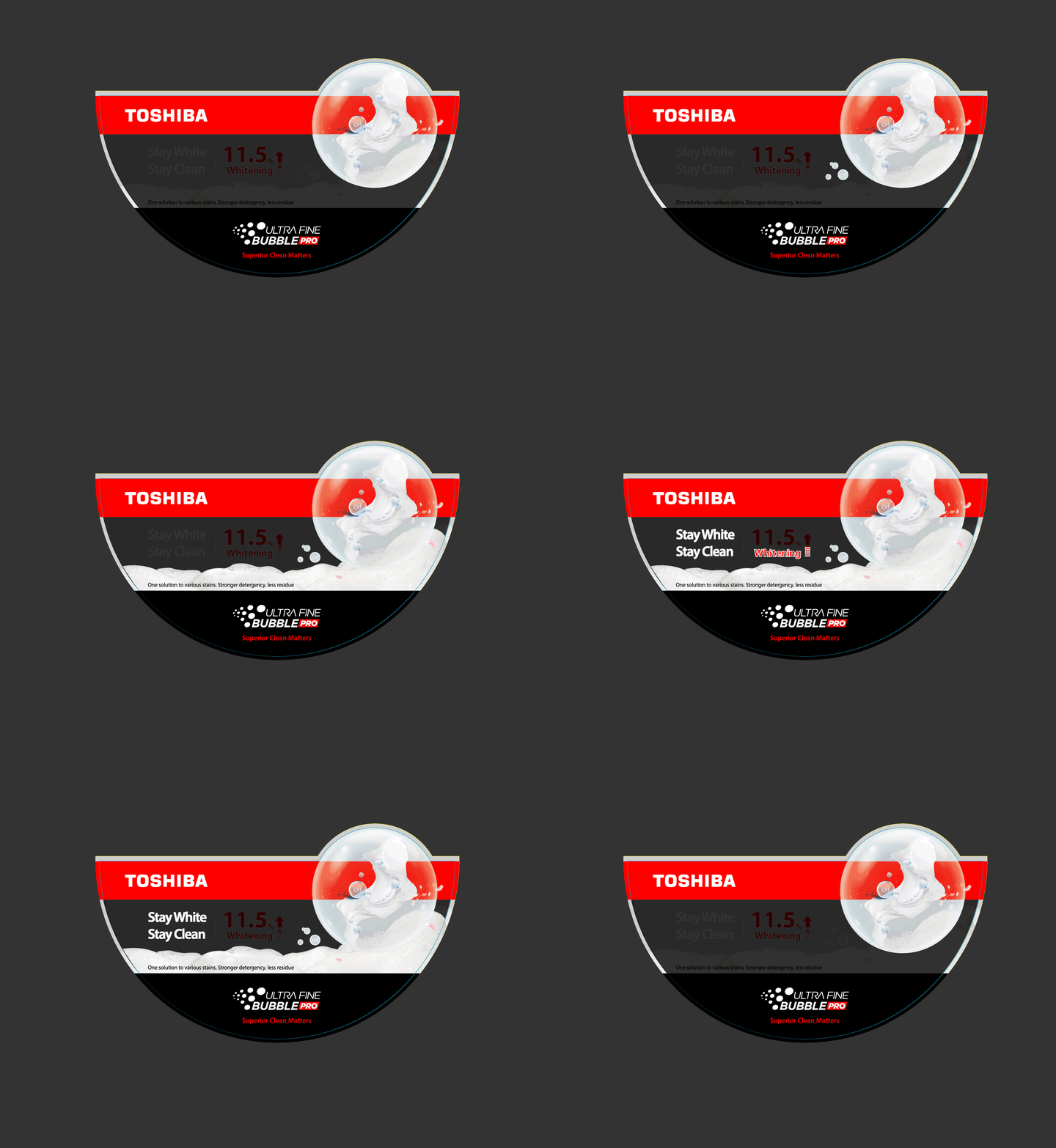
A looping animated e-paper instore advertising display
The replacement was an instore advertising display built on e-paper — the same reflective technology as an e-reader, but loaded with a short looping animation instead of static text. Mounted at eye level beside each Toshiba machine, the animation walks through the key selling points one frame at a time: the wash technology, the energy rating, the capacity. Each frame flashes in, holds long enough to read, then moves to the next.
The brief flash of motion is the whole point. A static card sits still and gets filtered out. A flash on an e-paper panel breaks through that filter — and once the shopper looks, the animation explains the feature in seconds, no reading required. The selling points are built into the motion, so a passing customer understands them at a glance.
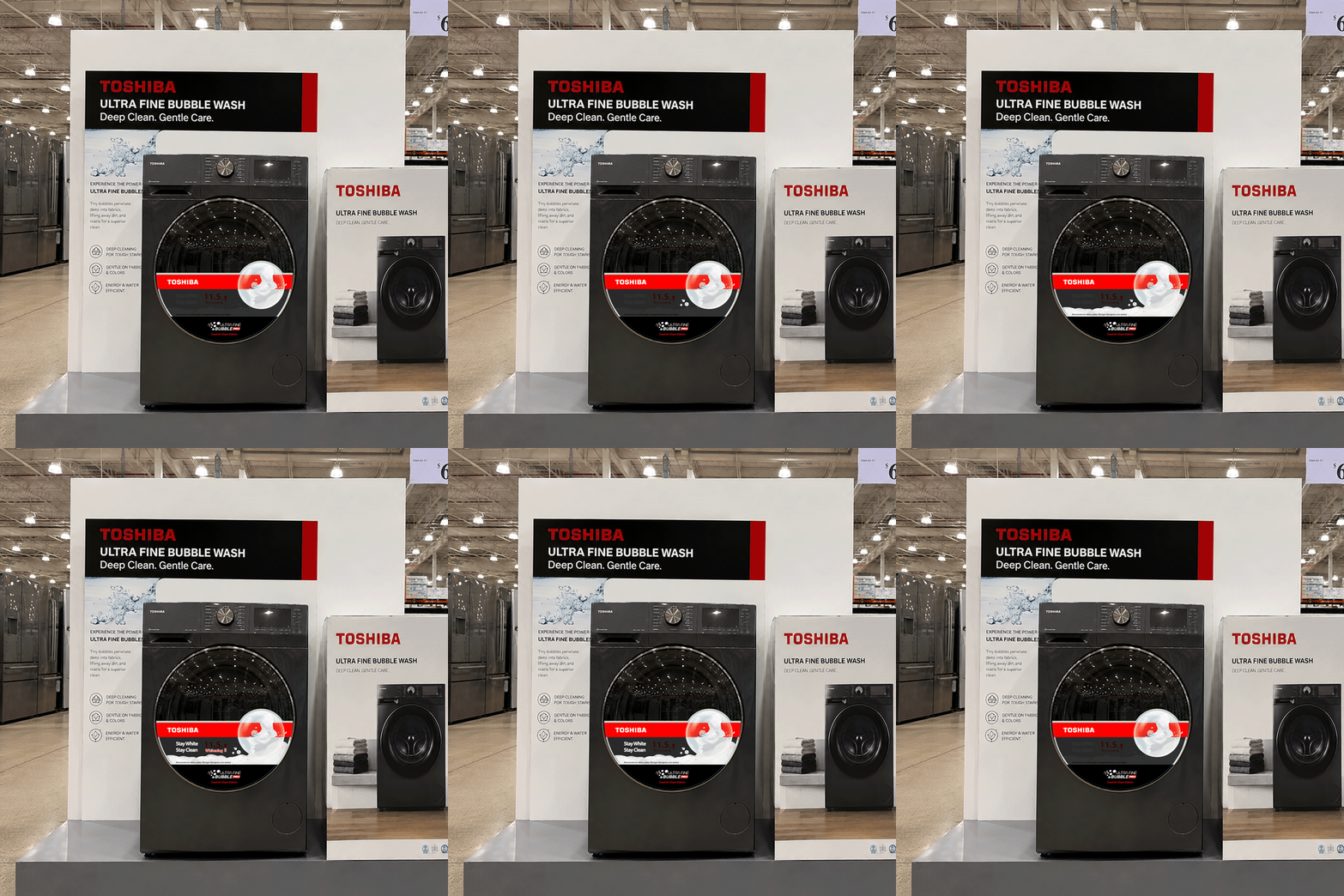
What that means on the floor:
- The looping animation cycles through Toshiba's key selling points — wash technology, energy rating, capacity — so every glance catches something different.
- A brief flash of motion pulls the eye where a static card gets ignored.
- The selling points are visual, not buried in fine print — a shopper understands the feature in seconds.
- No power outlet needed. The demo area had no outlets near the machines, and the display runs for about a year on a set of batteries.
Why e-paper fits a showroom floor
Bright rooms, no glare
Showrooms are bright on purpose. E-paper reflects light the same way a printed card does — readable from any angle. A backlit screen fights the room light; e-paper works with it.
No cables in the demo zone
The display mounts wherever the machine is — no outlet nearby, no extension cords across the floor, no installer. One set of batteries keeps it running for about a year.
Motion that gets noticed
A static card blends into the aisle. A brief flash of animation breaks through the visual noise and makes people look — then the looping message shows each selling point clearly, one frame at a time.
Motion that stays quiet
The aisle is already busy — machines, signage, prices, people. A flashing TV adds noise. E-paper adds just enough motion to earn attention, then holds a calm, readable message.
The bigger point
It's easy to assume e-paper only fits small shelf edges — price tags, talkers, tiny displays. The Toshiba aisle suggests otherwise. A washing machine bay is the same problem at a bigger scale: a static message competing for attention in a crowded space, and getting filtered out.
Add a looping animation, and the message breaks through. The flash makes people look, and the animation shows the selling points at a glance — no fine print, no sales pitch required. After that, the machine has to sell itself — and it usually does.
Ready to see your product on an animated e-paper display?
OIK Display designs and manufactures custom e-paper displays for retail — free GIF mockup within 24 hours, factory-direct pricing, low MOQs, worldwide shipping.